
Prof Daniel Shaddock, Co-Founder and CEO of Liquid Instruments, on his nine years at NASA JPL and why a tech startup CEO's job is not that different from a modern professor's.
This interview is part of Perpetuate's Fireside Q+A series (October 2024 to March 2025), a written interview first published on LinkedIn on 19 January 2025. Prof Daniel Shaddock is Co-Founder and CEO of Liquid Instruments, spent nine years at NASA JPL and is a former ANU Professor.
"The job of a tech startup CEO is actually not that different from a modern professor."
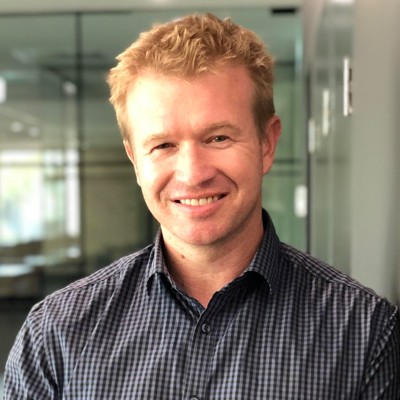 Prof Daniel Shaddock, Co-Founder and CEO, Liquid Instruments
I worked at the Jet Propulsion Lab, and it was a great place to work and I was very lucky to find myself in a very high performing group of people. But like any large organisation, there are superstars, but there are also lots of regular folks. JPL is somewhat special as NASA centres go, as it is run by Caltech and most of the staff are Caltech employees, rather than Civil servants like other NASA centres.
JPL was a leader in Robotic Exploration, and had very little to do with the astronaut program. Perhaps surprisingly, some of the best science missions don't really need astronauts. I really enjoyed the focus on science that a lot of JPL missions had.
When I joined, it was most famous for the Centre that built the Mars Rovers. My first year there I would often eat my lunch only a few metres away from engineers assemble the Spirit and Opportunity rovers (I was on the other side of the window separating the world from the clean room).
I think my time there gave me a lot of confidence and self belief in my own abilities. Growing up in country Australia, attending public schools I think I had an opinion that although I was smart, people from places like that were way smarter. After a few months at JPL working for some very supportive managers, I began to think that maybe I did deserve to be there.
It made me realise that our best Australian scientists and engineers can go toe to toe with the best in the world. Thanks to working with such a wonderful supportive team, when I returned back to Australia, I was far more confident in myself than when I had left, and didn't shy away from big challenges. I do think that this helped me get the confidence to take a leap and start Liquid Instruments.
I was very lucky to become a Professor at the ANU at a fairly young age and was able to lead a vibrant, successful research team. The job of a tech startup CEO is actually not that different from a modern professor. You need to be able to raise funds, attract a team of talented people. You need to be able to set the direction and goals of the group, but then also step back and let the superstars in your team tackle the challenges.
The transition from individual contributor to a manager is a tough one for many, and something that I struggled with personally. I personally made the classic mistake, that I have seen several times since. You want to be the one making the breakthroughs, working on the tough problems and coming up with the ideas yourself. As your team grows you need to learn how to let others take the lead on certain tasks, projects or problems.
I fought this for a long time "it's faster if I just do this myself". But then when I finally did make the switch to delegating the fun technical work I overshot. The psychology was "well if I'm not doing it myself then I am not my responsible".
This of course is not true, and as a leader you need to still be responsible for a good outcome without doing it yourself. You need to help your team be successful in much the same way that a parent helps their child succeed. It's a balance that is hard to hit first try.
I do miss my time (and my friends) at JPL but I will be forever grateful for the opportunity to work there.