
Dr David Ireland, Founder, VC and Stanford Fulbright Alumnus, on the trade-offs of academia, startups and corporates, non-executive roles, AI, failure and what Stanford taught him.
This interview is part of Perpetuate's Fireside Q+A series (October 2024 to March 2025), a written interview first published on LinkedIn on 27 November 2024, with questions from Stephen Tung, Founder of the executive search firm Perpetuate. Dr David Ireland is an Academic, Startup Founder, VC Investor and Corporate Executive, and a Stanford Fulbright Alumnus. (NED means Non-Executive Director.)
"We often conflate the failure of a task or activity with a failure of the individual, which isn't helpful."
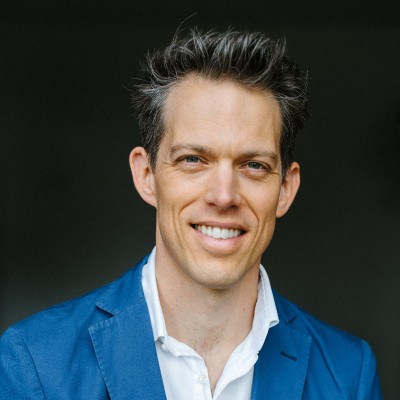 Dr David Ireland, Founder, VC and Stanford Fulbright Alumnus
That's a tough question, as each type of company has its highs and lows. For instance, I loved the intellectual freedom in academia, where I could focus on contributing to the collective knowledge of humanity. However, it was also challenging because, while generating knowledge was valued, turning that knowledge into real-world impact proved difficult.
The same applies to start-ups versus large corporations. I enjoy the build-and-disrupt culture of start-ups, but working with limited budgets, particularly in Australia, can be exhausting. On the other hand, large corporates offer bigger budgets but come with significant resistance to change, making it difficult to push through new ideas.
Ultimately, each experience has been uniquely rewarding and challenging at different times. All these roles have shaped who I am today and influenced my perspectives on life. So, I don't regret any of them – or at least, I try not to!
It's very different. As a non-executive, you're not involved in the day-to-day operations. Your primary focus is on governance and supporting the executive team. While there have been moments when I've stepped into more hands-on roles as a non-executive, it has always been issue-specific and done in collaboration with the relevant executive.
Serving in non-executive roles has broadened my perspective, especially in terms of thinking long-term about people and processes. I've learned that my role isn't to step in and 'fix' things that I think aren't working, but rather to collaborate with and support the executive team in addressing gaps or challenges.
This may not sound particularly original, but Artificial Intelligence is set to transform our lives in ways we can't yet fully imagine. Think about being asked in the late 1980s what the internet would do for humanity – it would have been nearly impossible to foresee the multitude of new products and services that emerged from that breakthrough.
I believe AI will have an even greater impact, not just by helping us find information and opportunities more efficiently but by synthesizing knowledge and creating new value for us. I'm genuinely excited about the potential opportunities AI brings, and while I'm doing my best to stay up to speed with its rapid advancements, it's already moving at an incredible pace.
With the right mindset, failure is one of the best ways to learn. It's important to look at failures and ask why things didn't work out. Were my assumptions or data flawed? Did I execute poorly? Whatever the reason, the key questions should be: how can I improve next time and, more broadly, what can I learn to become better overall? The caveat here is to try to keep failures manageable – experiment before committing fully. Understanding and balancing risk is essential.
Another crucial point is that, generally, Australians tend to have a skewed perception of failure. We often conflate the failure of a task or activity with a failure of the individual, which isn't helpful. Mistakes are a universal part of growth. Blaming someone when things don't go as planned, despite their best efforts and proper risk management, only stifles progress. This mindset leads to excessive risk aversion, making people hesitant to try new things. To truly innovate, push boundaries, and bring transformative solutions to market, we need to embrace failure as a learning tool, not a personal indictment.
My time at Stanford taught me the importance of saying yes more often. Yes to trying new things, to having meetings that might not offer an immediate return, and to collaborating across traditional sectoral, thematic, and disciplinary boundaries. It also instilled in me the value of a "pay it forward" mindset. I am deeply grateful to the Fulbright Commission for giving me the opportunity to experience Stanford. That experience didn't just make me smarter or expand my network – it introduced me to a whole new way of approaching life and work.