
Leigh Appel, Co-Founder and CTO of Safesite and Foresight, on what enterprise experience gives a Founder, why Co-Founders need shared history, and what has changed in ten years.
This interview is part of Perpetuate's Fireside Q+A series (October 2024 to March 2025), a written interview first published on LinkedIn on 5 December 2024. Leigh Appel is Co-Founder and CTO of Safesite and Foresight, Safety-Tech and InsurTech companies based in Brisbane and California.
"Founder disputes are the number one reason startups fail."
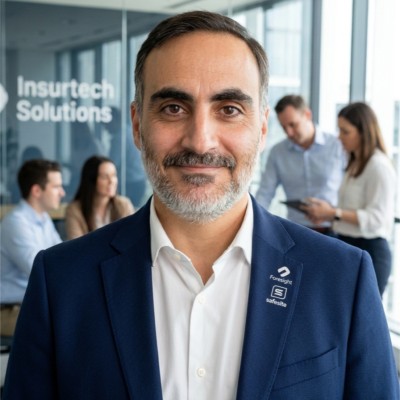 Leigh Appel, Co-Founder and CTO, Safesite and Foresight
Each stream brings its own unique challenges and learnings. As a founder, this multi-faceted experience has allowed me to navigate more easily through the various stages of a growing startup.
I've experienced the early stages, where you're largely an individual contributor wearing multiple hats; the middle stages, where you're growing a small team and managing multiple people; and the later stages, where you're managing multiple teams and directing an entire engineering organization. Each facet has brought lessons applicable to every stage of the journey.
Startup experience alone might not prepare you for managing teams or entire departments. Conversely, enterprise-only experience might leave you ill-equipped for the multi-tasking demands of startup life. If you've only worked in consulting, you might struggle with building and growing an in-house team.
There are two types of founders (I'm sure there are more but here's two archetypes). Founders with no experience but possess unbridled enthusiasm and a desire to bring forth a vision for how they want the world to be and founders who have been in the trenches, dealt with the problems and can see a vision for a better way forward.
I believe that the founders who are best set up for success have worked in an enterprise environment previously. The experience they bring can often provide a key insight that puts them on the path to product-market fit far ahead of founders who lack the same context.
If you're a founder of type 1, don't let this discourage you from going all-in but from an outsider's perspective – say, an investor – who's more likely to succeed?
Founder disputes are the number one reason startups fail. These conflicts typically arise during tough times, which are inevitable throughout a startup's journey. Without the shared history, camaraderie, and dependability that come from knowing each other for a long time, we would've been ill-equipped to weather these storms.
In many ways, the founder relationship is like a marriage – "in sickness and in health." Can startups be founded by people who have just met or barely know each other? Absolutely! When a business is in its infancy, everything seems bright. However, when the going gets tough, will these founders do what's necessary to overcome the tremendous headwinds that often arise during a company's lifespan or will they take the next available exit ramp?
Interestingly, what's most surprising is how little has changed. In the B2B world, businesses still focus primarily on their bottom line and how your offering positively impacts it. Companies are more willing than ever to adopt new technology, often seeing your product as a competitive advantage. However, this adoption is ultimately in service of increasing revenue, enhancing value, or reducing costs. While specific strategies may come and go, this underlying principle remains constant.
That said, I believe we're on the cusp of a paradigm shift with the advent of generative AI and AI agents – a development that will dramatically change how companies do business.