
Thomi Richards, Senior Engineering Director at Zapier, on working remotely, influencing decisions across timezones and the growth of New Zealand tech.
This interview is part of Perpetuate's Fireside Q+A series (October 2024 to March 2025), a written interview first published on LinkedIn on 14 January 2025. Thomi Richards is a Senior Engineering Director at Zapier, working fully remotely from Dunedin, New Zealand, and previously worked at Canonical.
"Working remotely is not simply a case of transplanting an in-person office culture into a remote setting."
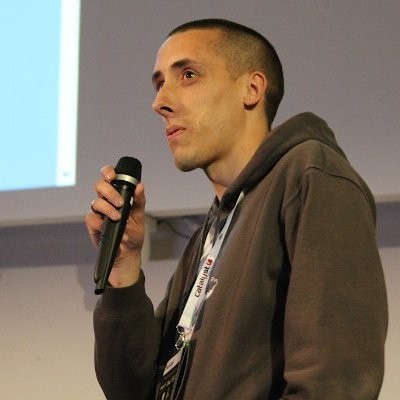 Thomi Richards, Senior Engineering Director, Zapier
Some things are within your control: Ensuring you have enough physical space to separate "work" from "life" is essential - a separate room to use as an office is ideal. Building separation in time is important too: have a pretty strict schedule for when you're going to be in "work mode" and when you're not. Without a commute to separate your work from your personal life, it's all too easy to find yourself working when you shouldn't be. I've never personally had the opposite problem.
The more interesting aspect is picking carefully who you decide to work remotely for. Remote work comes with its own culture: Employers need to understand that working remotely is not simply a case of transplanting an in-person office culture into a remote setting. Remote work should offer increased flexibility for employees, and this only works if employers and employees trust one another. I have been fortunate enough to work for several companies that understand this and have created excellent remote-work cultures.
The tradeoffs inherent in deciding to work remotely are tough. It is certainly harder to build a sense of camaraderie with your colleagues. It's harder to discuss your work problems with your colleagues over a cup of coffee and help each other out.
However, our tooling has gotten so much better in the last 15 years: Slack, Zoom, Coda, Figma, not to mention countless others, do a pretty good job of enabling these sorts of ad-hoc conversations. However, these conversations have to be planned, or at least initiated explicitly. This requires building a culture where engineers are encouraged to reach out for help, to be explicit about what they're working on and when they're struggling, and to build psychological safety with their peers. Rituals such as regular team retrospectives and roadmap shaping can help here. There's definitely an overhead, although it can be mostly mitigated using the above techniques.
There are advantages as well. Being able to hire from anywhere in the world dramatically increases the hiring pool, which helps ensure you're able to hire the best engineers for the role. Hiring worldwide also tends to increase the diversity of engineering teams, leading to higher-performing teams overall. On-call responsibilities can become easier if you're able to build engineering teams around the globe, as it eliminates the need for engineers to respond to incidents outside their normal working hours.
Canonical's remote work philosophy was to hire the right people for the job, no matter where they lived. From that principle, they built a remote work culture that levelled the playing field for everyone - even folks based in New Zealand. A key component of this is leveraging truly asynchronous decision-making processes, which make it possible for someone to contribute meaningfully in a conversation even if they can't respond immediately. Teams at Canonical tended to be spread across the globe: I was part of several teams where I had no timezone overlap with some of my teammates, but Canonical's team culture gave us a set of norms that allowed us to bridge that gap. Regular in-person meetings helped build camaraderie that carried over into our remote asynchronous work as well.
By contrast, Zapier took a different approach: Zapier is unapologetically centred in North America, but is expanding further east (into Europe) and west (into APAC) as and when makes sense. Zapier teams work much more synchronously, and as such tend to be clustered within a small range of timezones (for example, AEST to PST), allowing for synchronous conversations when that's required.
In both cases, my ability to influence senior-level decisions within the company depends entirely on the company having adopted a framework for inviting feedback from the wider employee base. At Canonical this was done using emails and subject-aligned mailing lists. At Zapier we've adopted DACIs as a way to invite participation from a broad audience before a decision is made. In both cases, my timezone has minimal impact on my ability to contribute meaningfully to the decision-making process.
The tech ecosystem is in a much better place today than it was when I graduated in 2006. I see a few different factors leading to that outcome:
A handful of big success stories (e.g., Xero, Pushpay) have emboldened a new generation of NZ-based startup founders. Startup weekends, co-working spaces, tech accelerators and coding bootcamps are all more common than they were when I graduated, even in a relatively small city like Dunedin. The tertiary education sector is doing a better job of keeping up with innovation, leading to graduates being more able to have an impact right away.
Infrastructure is improving as well: Dunedin was the first city to receive Gigabit fibre services, which has helped in-office and remote companies alike (believe me, trying to participate in a video call over ADSL was not a fun experience). Public cloud providers are investing in New Zealand as well, removing yet another barrier for NZ-based tech startups.
As remote work becomes more accepted within the industry, New Zealand is emerging as a key location for US-based companies to hire from: We have reasonable timezone overlap with Silicon Valley, we're a highly educated population, and we're comparatively cheap to hire.
The wider tech industry is in uncertain times right now, but New Zealand's tech scene will continue to improve. I'm feeling particularly positive about the future for remote workers in this country. I'm seeing more interesting opportunities today than I have in the past.